

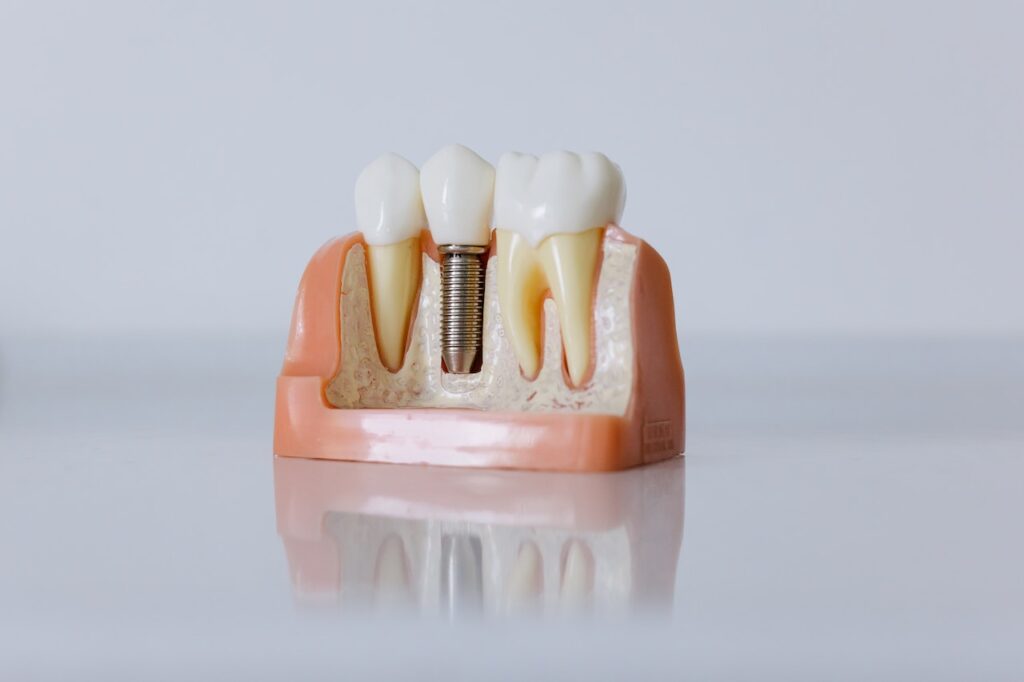
There are several techniques to repair lost teeth, whether you have one or more. Full Mouth Dental Implants could be an option for bridging, partials, or full dentures. Implants are being used to hold false, replace missing teeth and restore deficient roots. They are comfy and have a natural appearance.
The various Dental implants services are a great option. It is best if you need to replace a tooth since they are linked to the jaw and may be used. Due to his exceptional technical competence, our dentist has gained widespread recognition for effective dental work in kota. The implant is placed in the jawline where the bone fuses with the ceramics implant to lengthen the jawbone.
What is a full mouth dental implants
A dental implant is a replacement tooth root that is surgically inserted into the jawbone. Implants are typically made of 100% titanium, which is an extremely biocompatible metal. The cells in your jawbone will actually attach to the implant, which fuses it directly to the bone. The implant is connected to a small post that serves as the foundation for tooth restoration.
How Dental Implants Work
A titanium steel synthetic root is what a full mouth dental implants is. It is put into the jawline to take the native tooth’s root position. The tooth implant is connected to a dental prosthetic. The new tooth is secured in place by the implant, which serves as anchoring.
Can You Have A Dental Implant?
Having a dental implant procedure would help if you had excellent oral health. The following criteria determine your candidacy for tooth implant surgery.
- The degree of tooth decay.
- Physiology of the mucous membranes
- Jawbones offer assistance.
- Bone dimensions, form, and nearby teeth
- Amount of diabetes.
- Gum health.
- The patient takes bone-building medications.
- Required implant position.
The Process of Placing a Dental Implant
To determine whether getting full mouth dental implants service is the best option, your dentist or expert will thoroughly inspect your jaw and collect x-rays of your head, jaw, and dental.
- During the initial surgical procedure, your dentist or other medical professionals insert a dental implant onto your jawbone just below the gum line. After that, the gum membrane is sewn back into position.
- The implant will solidify with the jawbone and adhere to the gum as the tissue recovers. Healing might take weeks or months.
- Your dentist or another medical professional will place an abutment to implantation throughout the second phase of the operation and when the tissue has healed.
- The abutment is a screw that joins the implant and prosthetic tooth. One can occasionally complete the first and secondary stages of implant placement in a single procedure.
- Your dentist or other professional crafts a synthetic replacement tooth and affixes it to the bridge. The new tooth may need to be fitted to the abutment throughout multiple sessions.
- A fixed bridge that replaces multiple teeth or all of your dentures is fastened to dental implants.
- A bridge seems to be a dental treatment that spans a space where there are no teeth to restore any more rotten teeth. Full Mouth Dental implants secure the bridge on either end of the displaced tooth or teeth.
Ideal Replacement of Missing Teeth
Single Missing Tooth

Several Missing Tooth

Complete Denture

Important Factors to Consider for Dental Implants
- It can take several trips to your doctor or dental expert before the procedure is finished.
- Next year, they will plan check ups so your dentist can ensure your implantation is functioning correctly.
- Your implants will require meticulous maintenance. You can also successfully get a front tooth implant.
- Compared to replacement teeth, implantation can be more expensive and may not be reimbursed by your dental insurance. Contrary to other types of tooth replacement surgeries, however, this is often a one-time expense.
- Even though they are uncommon, dental implants might result in bleeding, infections, numbness, or damage to adjacent muscles or sinus cavities.
- Because it failed to connect to the bone in some circumstances, the implant might not be effective.
You can also get full mouth dental implants from experts.
Advantages of Dental Implants

- The best dental implants service provides several advantages. As was already established, they function just like your natural teeth and may significantly boost your general self-esteem.
- They mimic your natural teeth in appearance and feel, can increase your self-esteem, are practical, long-lasting, and improve your overall dental health.
- They also support your ability to speak, feel comfortable, and chew. In contrast to alternatives like dentures, dental work does not need to be taken out, and you may brush, floss, eat, and even rest with them and even.
If you believe a dental implant would be right for you, be sure to see your dentist and see whether an implant is necessary. You can get your dentist’s help in determining if a dental transplant or astra implants are required. They would ultimately develop the best treatment strategy specifically for you.
So What Are You Waiting For?
Grab the opportunity to consult our experts regarding your dental work today! Contact us at Singhvi Dental Clinic to learn more about getting the best services and dental implant costs in kota.
Keeping the 3 most important factors of form, function and aesthetics in mind, dental implants are the ideal solution for replacement of natural teeth. Whether you need to replace few or all of your teeth, you will notice a few striking benefits:
Frequently Asked Questions
How are dental implants used ?
How do I care for my dental implants ?
Am I a good candidate for dental implants ?
This could involve x-rays to verify that you have adequate bone in your jaw to support the implant. Based on the results of your examination, your dentist will recommend an appropriate treatment plan.
Can dental implants fail ?
Implants can fail if the bone doesn’t attach to the surface or can occur if the bone is soft or if the implant is unstable. Other reasons for failure include post-surgical infection and poor oral hygiene. Smoking is also a significant risk factor for implant failure. If an implant fails, it can usually be replaced if there is enough bone and tissue support.